
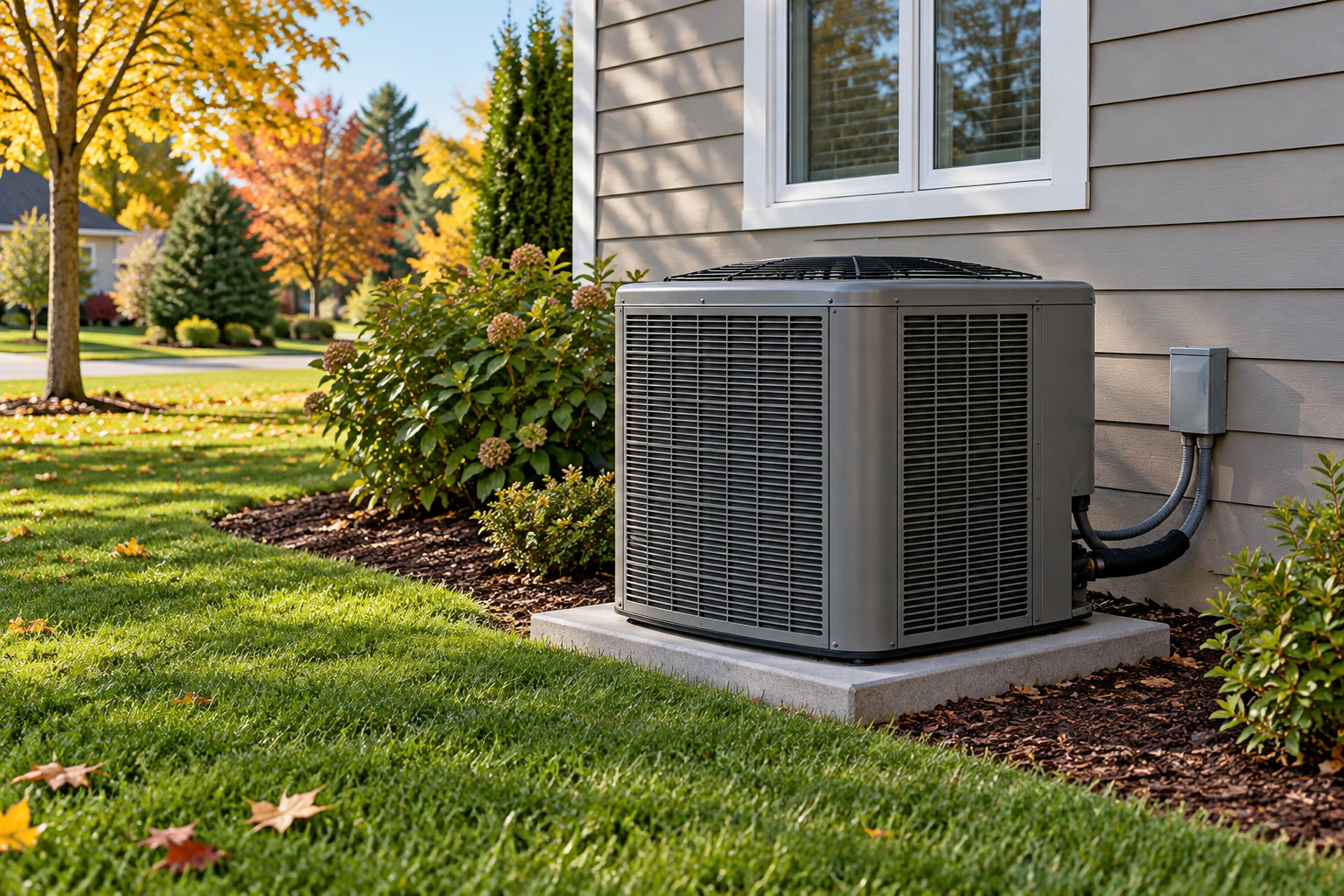
A heat pump maintenance plan should account for both heating and cooling, not just a single AC tune-up label on an invoice. Identify your equipment, follow its owner instructions, and ask the contractor which seasonal checks apply. Keep homeowner care limited to accessible routine tasks; electrical, refrigerant, and internal mechanical work belongs to qualified professionals.
This guide is for homeowners organizing care for an existing residential heat pump. It is not a repair procedure, a price guide, or a recommendation to buy a maintenance agreement. If you are still identifying the equipment, our heat pump versus air conditioner guide explains the distinction.
Start with the equipment you actually own
Find the owner manual and installation or service paperwork. Record the indoor and outdoor model information from documents or safely readable exterior labels. Do not open cabinets or climb to reach a label. Note whether the system is ducted or ductless and whether separate backup heating appears in the paperwork.
That information makes a service request specific. “Please maintain my heat pump” can mean different work depending on the equipment. Ask the provider to identify what is included for your system and what is outside the visit. If a furnace supplies backup heat, ask whether its separate safety and maintenance needs are included; do not assume a heat-pump check covers combustion equipment.
Keep maintenance records in one place: dates, findings, filter information, completed repairs, and the next recommended review. A blank checklist marked complete is less useful than a record showing what was checked and what needs follow-up.
Seasonal Heat Pump Maintenance Map
Use this map to keep heating and cooling preparation connected without treating them as the same visit. ENERGY STAR's maintenance checklist recommends annual pre-season professional checkups, with cooling preparation in spring and heating preparation in fall. The map below organizes that conversation; its seasons are planning contexts, not a universal visit count or replacement interval.
Give every item one status: recorded, due under the equipment instructions, assigned to the service company, or not assessed. An unchecked item is not a passed inspection. Keep the date, equipment identity, source of the instruction, and person responsible beside the status. Use paper or your own notes; this page does not collect your equipment information.
Before cooling season: carry winter findings forward
- Bring forward any unresolved heating-season finding rather than starting a fresh checklist that hides it.
- Identify which indoor units and owner-accessible filters belong to the system. Put the filter specification and applicable instruction beside each one; an invoice saying "filter checked" does not identify every filter in a multi-unit home.
- Assign professional cooling-mode, drainage, coil, airflow, and control checks to the provider's written scope. Mark anything the provider cannot evaluate under the visit conditions as not assessed, with a follow-up owner and trigger.
The record to leave with: cooling preparation date; filters covered; work completed; work not assessed; unresolved winter concern and who owns it. Use the filter and MERV guide for compatibility, not this map as a replacement specification.
During cooling season: record changes, not experiments
Use the normal owner-accessible filter routine in the applicable instructions. ENERGY STAR recommends monthly filter inspection; cleaning or replacement still depends on filter type, condition, and the instructions. Record what happened, not simply that a month passed.
Keep a short change log: date, cooling mode, location affected, and what was already noticed during ordinary use. Visible water, a new sound, or lost comfort belongs in a service report; it is not an invitation to open equipment or repeat a failure. If an item was left unassessed at the pre-season visit, carry that same item forward until the provider explains its disposition.
Before heating season: identify what supplies backup heat
Add the heating equipment named in your existing records, including any separate furnace or auxiliary-heating arrangement. Unknown backup arrangement is a valid entry. Do not choose thermostat modes to discover it.
Have the service scope distinguish the heat pump's heating operation from any separate backup equipment. If combustion equipment is involved, its assessment should not disappear under a generic "heat pump serviced" line. Record whether it is included, separately assigned, or outside this visit. Use the model documentation and provider's explanation to establish responsibilities; do not assume a second appliance has been maintained because the outdoor unit was checked.
During heating season: keep observations in context
Record a concern with the operating mode and any ordinary display message already visible. Note whether it is new, recurring, or unchanged since the last report. Do not diagnose a failure from a single frost observation, force a defrost cycle, chip ice, or cover the outdoor unit because cooling season has ended. Keep any provider advice with the date and the equipment it applies to.
The outdoor area still needs safe access while the equipment is used for heating. Observation from a normal safe position is different from touching the coil, clearing internal parts, or working around connections.
Professional service items: close the loop on findings
The contractor's report should separate completed maintenance, a diagnosed fault, an optional recommendation, and an item not assessed. Electrical connections, refrigerant work, internal coils, blowers, controls, and backup-system evaluation are not homeowner checklist tasks. The applicable work and method depend on the equipment.
Illustrative record, not a service recommendation: a ducted heat pump has separate furnace backup listed in the owner's records. A cooling visit checks the cooling operation, but its invoice does not cover the furnace. The homeowner's map records "cooling visit completed; backup heating assigned separately," rather than "whole system passed." Later, the backup-service report is attached to the same map. No extra visit is assumed mandatory: the point is to expose the coverage gap and resolve it against the actual instructions.
Prepare for the service visit
Make ordinary access routes clear without disturbing the equipment. Move household storage that blocks a safe approach. Tell the provider about pets, locked areas, or access limitations before arrival. Do not move heavy equipment, remove panels, or enter an unsafe attic or crawlspace to make the appointment easier.
Provide a short list of changes since the last visit: an unusual sound, comfort problems, error messages, water, or a recent control replacement. Include when a symptom occurs and which mode is in use. Distinguish an intermittent complaint from a condition happening right now.
Ask for a written scope. ENERGY STAR's checklist includes professional checks of controls, electrical connections, drainage, coils, refrigerant, and blower components. The relevant work depends on the system; it is not a DIY checklist. Request an explanation of any item the provider could not assess and avoid assuming that “inspection” includes every cleaning or repair.
Keep the outdoor unit accessible without servicing it
Observe the surrounding area for stored items or encroaching vegetation. Follow model-specific instructions and get help if work would require reaching into equipment, handling connections, or cutting overhead branches. Our outdoor AC clearance guide explains how to plan access without treating a general landscaping distance as a universal rule.
Because a heat pump may operate for heating, do not assume that the end of summer means the outdoor equipment is ready to be covered. Ask the manufacturer or contractor before adding any cover or enclosure. Do not chip ice from equipment, apply heat, or try to force a defrost cycle yourself.
This article does not diagnose winter frost behavior. If you are unsure whether what you see is normal for your model, describe it to the service provider. Persistent abnormal operation should receive its own assessment rather than waiting for the next routine appointment.
Do not turn maintenance into a repair experiment
Do not attach gauges, add refrigerant, replace capacitors, tighten electrical connections, or open sealed components. EPA identifies refrigerant-circuit work as requiring appropriate technician certification. Certification for that work does not make every other possible task suitable for an unqualified person.
Stay away from water near electrical parts, damaged wiring, smoke, or unstable equipment. If safe, use the normal thermostat control to stop operation when advised or when an obvious abnormal condition warrants stopping. Do not reset a repeatedly tripping breaker or bypass a safety device. Immediate fire or electrical danger requires emergency help.
For visible cooling-season leaks, our AC condensate-drain guide explains safe observations. Do not pour cleaning chemicals into an unknown line as part of routine care.
Evaluate the report before buying extra work
Separate three things on the invoice: maintenance performed, a documented fault, and an optional recommendation. Ask what evidence supports each additional repair and whether it needs immediate attention. An age-based sales suggestion is not the same as a confirmed failure.
If comparing agreements, ask which visits, tasks, exclusions, and follow-ups are included. Our service-cost and maintenance-plan guide covers that purchasing decision. This article intentionally does not assign a universal annual maintenance price.
Before the technician leaves, clarify the next owner task, its safe access procedure, and when to contact the company again. Keep those instructions with the report rather than relying on memory during the next season.
Bring this map back at the next seasonal change
Keep one continuing record rather than a new blank checklist each season. Copy forward the exact equipment, applicable owner instruction, last completed task, unresolved finding, and next responsible person. Update only what new records or ordinary observations establish. The useful result is a maintenance plan that remembers what happened in both modes, including anything the last visit did not cover.
Source review: November 1, 2026. ENERGY STAR supports the maintenance categories and seasonal context; the map and illustrative record are Mavelynt's organizational aids, not a manufacturer's checklist or proof of a completed inspection.