
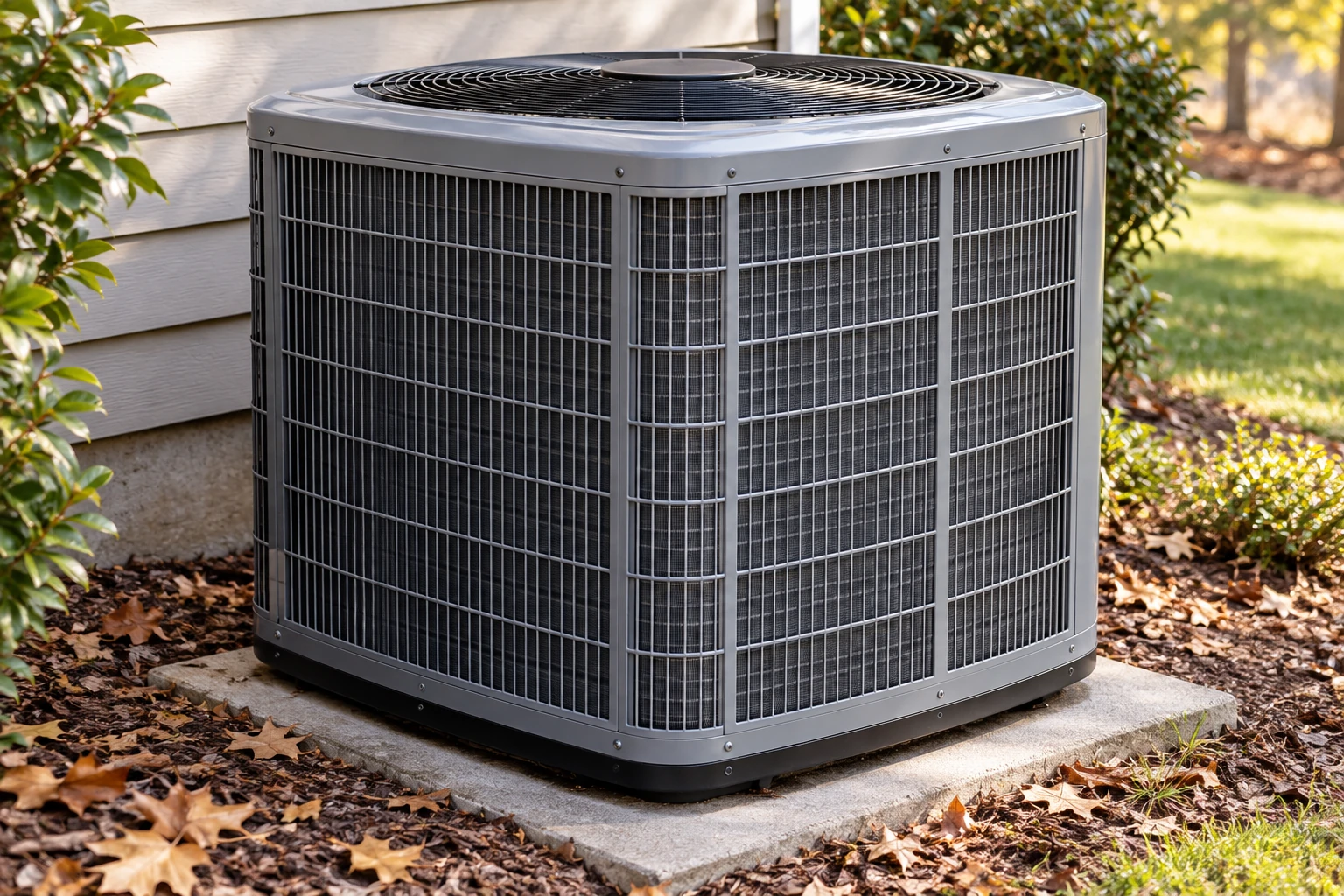
Outdoor AC coil cleaning and clearing space around the cabinet are different jobs. Open space helps air reach the unit; it does not establish that the coil surface is clean. Before approving condenser coil service, confirm which coil the company means, why cleaning is proposed, and what the work includes.
This guide concerns the outdoor coil of a split-system air conditioner during cooling operation. It explains maintenance scope and safe owner observations, not a cleaning procedure. Leave panel removal, electrical isolation, internal access, products, rinsing, and equipment restoration to a qualified HVAC professional following the actual equipment instructions.
Identify the coil named in the proposal
In a typical split-system AC, the indoor evaporator coil absorbs heat from indoor air and the outdoor condenser coil releases heat outside. Carrier's coil-maintenance guidance explains those separate roles and cautions about delicate coil fins.
Ask the company to identify whether its quote covers the outdoor coil, indoor coil, or both. A line reading “clean AC” is not enough to compare two scopes. Heat-pump equipment also operates differently between heating and cooling, so use the installed model's documentation instead of assuming every outdoor maintenance instruction is interchangeable.
Do not open equipment to locate a coil. An existing model record or a technician's explanation can identify what is being proposed without homeowner access to internal components.
Separate visible buildup from a diagnosis
From a safe, ordinary ground-level position, you may notice material against an exterior grille or visible dirt behind it. Record what you can see without reaching through the guard, touching fins, leaning over the fan, or standing in an unsafe area.
Appearance alone cannot tell you how much performance has changed. A longer run time, warmer room, or increased bill also does not prove a dirty outdoor coil. Ask the provider what finding supports cleaning and whether another issue remains unresolved.
ENERGY STAR's maintenance checklist includes professional coil cleaning and explains why dirty coils can affect heat transfer and system operation. It does not support a guaranteed savings amount for a particular cleaning visit.
If you see smoke, sparks, an unstable cabinet, exposed wiring, or another immediate hazard, move away and seek appropriate help. Do not approach equipment to get a better maintenance photograph.
Keep yard care within its own limits
Ordinary ground-level housekeeping around the unit can be separate from coil work. Avoid directing grass clippings or loose material toward it, and keep belongings from obstructing the equipment. Do not reach into the cabinet or clear material caught in moving or electrical parts.
Our outdoor AC clearance guide covers landscaping and manufacturer-specific spacing. A clearance measurement is not a coil-cleaning instruction. Likewise, cleaning a coil does not correct a fence, cover, or plant arrangement that blocks required airflow or service access.
Do not use this article to select a pressure washer, compressed-air setting, brush, chemical, or water direction. Equipment construction and service instructions differ, and coil surfaces can be damaged. “It looks like a garden chore” is not a safe basis for choosing a cleaning method.
Before / During / After Service Record
Use the record to connect a cleaning recommendation to a documented finding and a service result. It is not a work checklist for you to carry out. Complete owner notes only from ordinary safe observations and paperwork; the technician supplies internal findings, methods, and any service measurements.
Before: establish what the recommendation is based on
Record the equipment identifier, outdoor coil named in the recommendation, date, and source of the finding. Keep these statements separate:
- Observed by the owner: what was already visible from a normal safe position, or the comfort complaint already experienced.
- Reported by the provider: what its inspection found, where it found it, and which coil it assessed.
- Not established: the cause of a comfort complaint, savings from cleaning, or the condition of areas not assessed.
An entry reading "outdoor coil cleaning recommended" names a service but not its basis. An entry identifying accumulated material on the inspected outdoor coil and the area assessed gives the recommendation a traceable basis. It still does not prove that the coil caused every comfort problem or that cleaning will deliver a promised bill reduction.
During: retain the professional scope, not a DIY recipe
Save the approved work and the technician's completion record. It should identify the coil serviced, the areas the job covered, whether the equipment-specific procedure was used, and any area not reached or condition requiring separate work. Record actual limitations rather than filling them in from a stock checklist.
Do not open the cabinet, perform isolation, select a chemical, direct water or compressed air into the equipment, straighten fins, or reproduce a technique from a video to verify the invoice. Carrier's coil guidance recommends professional cleaning and emphasizes protecting delicate coil surfaces. This record deliberately supplies no product, pressure, dilution, access, or restoration procedure.
After: separate completed cleaning from a solved complaint
Attach the invoice and any photographs supplied by the professional. Record its findings after the work, any checks it actually performed, outstanding damage or uncertainty, and who handles follow-up. If the original complaint persists during ordinary use, note that separately. Do not run a prolonged cooling trial or compare utility bills as proof that one visit succeeded or failed.
A useful close-out entry answers three different questions: Was the named cleaning completed? What did the professional document afterward? Is the original reported problem resolved, continuing, or not yet evaluated? A yes to the first question is not automatically a yes to the third.
Read a vague note and a supported note differently
Illustrative paperwork, not an actual service record: the first note says "dirty unit; clean recommended." It does not name the coil, inspected area, or basis for the recommendation. Mark the evidence incomplete rather than diagnosing the equipment from that sentence.
A second note identifies the outdoor condenser coil and the buildup documented during the professional's inspection. Its completion record says which area was serviced and which concern remains for assessment. This is a more usable chain of evidence, even if it contains no efficiency percentage. It supports understanding the proposed maintenance; it does not guarantee that cleaning alone corrects a warm upstairs room or high energy bill.
If a professional recommends work beyond cleaning, keep its diagnosis and authorization separate. General tune-up prices and service-agreement comparisons belong in the HVAC service-cost guide, not in this cleaning record.
Keep the record for the next recommendation
Bring the equipment identity, prior finding, completed work, and unresolved issue back when cleaning is proposed again. Compare what is newly documented rather than accepting "it is time again" as a complete explanation. The schedule still depends on the actual equipment, instructions, use, and conditions. ENERGY STAR's checklist includes professional coil maintenance; it does not establish one cleaning interval or savings result for every home.
If there is visible ice or a continuing cooling fault, use the frozen-coil guide for that separate concern and arrange appropriate assessment. Do not treat another cleaning as an automatic diagnosis or attempt to thaw or service the coil yourself.
Sources rechecked November 1, 2026. The evidence record and sample notes are Mavelynt's explanatory aids, not evidence of inspections performed by Mavelynt. The existing featured image remains an AI-generated editorial illustration, not a before-and-after service photograph.