
Arranging air conditioner repair is easier when you separate three decisions: who will assess the problem, what you are authorizing during the visit, and what record you need afterward. You do not need to identify a failed part before calling. A clear description of what you noticed is more useful than a confident guess.
This guide helps U.S. homeowners prepare for professional service on residential central air conditioning. It is not a directory of local companies, a repair tutorial, or a price list. Start with the company's suitability for your equipment and location, then make the handoff from homeowner to technician explicit.
Choose the Right Kind of Help
Tell the company whether you need an assessment of a current problem, routine maintenance, or a discussion about replacement equipment. Those requests are not interchangeable. If you are uncertain, describe the problem and ask which appointment to book rather than selecting a service package based only on its name.
For example, “the upstairs rooms became warm yesterday while the thermostat was calling for cooling” describes an observation. “The compressor is broken” asserts a diagnosis you may not have. Keep your account factual, including whether the problem is continuous or intermittent and what has already been attempted by a professional.
If you are still deciding whether a service visit is needed, use our AC not cooling guide for safe observations and stop conditions. Do not open equipment, handle wiring or capacitors, connect gauges, or repeatedly reset a breaker to gather evidence. Smoke, fire, sparks, or another immediate hazard call for appropriate emergency help, not a round of contractor comparisons. Move away from the hazard and contact emergency services when needed.
Verify the Company Before Booking
ENERGY STAR's contractor guidance recommends checking the requirements where you live, seeking referrals, and contacting references. Ask whether a reference concerns similar service work rather than an unrelated installation. A recommendation is a starting point, not a substitute for verification.
The FTC advises checking licenses with state or county government and requesting proof of insurance. Requirements vary by location and work; ask the relevant authority what applies instead of assuming every state uses the same credential. Confirm that the business name on the booking and paperwork matches the company you checked. Read reviews critically, especially when they give little detail about the work.
Ask the company directly:
- Do you service this type of residential system in my area?
- Can you assess the specific symptom I am describing?
- Who is responsible for the appointment if another company or subcontractor attends?
- How will I recognize the person you send, and which office number should I use if something does not match?
- Can you explain what the initial appointment authorizes before I book?
For work involving refrigerants, ask how the company meets the applicable technician requirements. EPA Section 608 requires certification for covered service activities; closely and continually supervised apprentices have an exception. That credential is not a general guarantee of workmanship or a replacement for other applicable requirements. Homeowners should not perform refrigerant work to prepare for the appointment.
Prepare a Short Service-Call Note
Use records you already have and observations you can make safely. ENERGY STAR recommends having system information and maintenance history available. Do not remove a panel, enter an unsafe attic, or approach damaged equipment just to obtain a model number. An old invoice or owner's document may be enough to start the conversation; otherwise tell the company the information is unavailable.
| Information | What to write down |
|---|---|
| Main symptom | What changed, in ordinary language, without naming an unconfirmed failed part |
| Timing | When you first noticed it and whether it comes and goes |
| Affected area | Which rooms are uncomfortable and whether the problem seems limited to one area |
| Existing records | Model details, prior service notes, and warranty documents already available safely |
| Prior response | What a professional already assessed or repaired, and whether the symptom returned |
| Access arrangements | Known access limits, pets to secure, and who can meet the technician |
- Information
- Main symptom
- What to write down
- What changed, in ordinary language, without naming an unconfirmed failed part
- Information
- Timing
- What to write down
- When you first noticed it and whether it comes and goes
- Information
- Affected area
- What to write down
- Which rooms are uncomfortable and whether the problem seems limited to one area
- Information
- Existing records
- What to write down
- Model details, prior service notes, and warranty documents already available safely
- Information
- Prior response
- What to write down
- What a professional already assessed or repaired, and whether the symptom returned
- Information
- Access arrangements
- What to write down
- Known access limits, pets to secure, and who can meet the technician
Keep the note brief enough to use during a phone call. Distinguish what you personally observed from what another person told you. If a detail is unknown, write “unknown”; do not fill in an equipment age or refrigerant type from memory unless you are confident it is correct.
Before the visit, ask what access the technician needs and make ordinary walkways available if safe. You do not need to expose internal components, disconnect anything, or stage a demonstration of a dangerous fault. Keep children and pets away from the work area.
Make the Appointment and Authorization Clear
Confirm the arrival window, the person who can authorize work, and how the office will communicate delays. Ask what happens if the technician cannot complete the assessment or needs another visit. These are questions to resolve with the company, not promises that every provider offers the same terms.
At arrival, check that the visitor matches the arrangement. If the name or company differs, call the office using the number you independently verified before allowing work to proceed. Explain the symptom and hand over the relevant records. Give the technician room to assess the system without requesting a particular part replacement as a condition of the visit.
Separate permission to assess from permission to repair. Ask the technician to explain the finding, the proposed action, and what remains uncertain before authorizing additional work. For visit charges and written price comparisons, see our HVAC repair cost guide; this page does not supply a second set of price estimates.
The FTC recommends written estimates and cautions against pressure to decide immediately or pay the entire project amount upfront. Read the terms before agreeing. A promotion or an urgent sales pitch does not resolve an unclear diagnosis. If the situation is safe and the proposed work is substantial or poorly explained, ask for time to consider another professional assessment. FTC contractor advice.
If compressor replacement is specifically proposed, use our compressor replacement guide to distinguish that component from an outdoor-unit or whole-system proposal. Do not turn a general service visit into an assumed compressor replacement before the assessment supports it.
Ask for a Useful Completion Record
Before the technician leaves, ask for a plain-language explanation of what was found, what was done, and what remains unresolved. Ask them to explain or demonstrate the outcome safely; do not request that a hazard be recreated. A verbal “all set” is less useful for a later service call than a specific written record.
Use this handoff checklist to identify missing information. It is an organizational aid, not a claim that every item is legally required on every invoice.
- The equipment assessed and the symptom reported.
- The finding and work actually completed, distinguished from recommendations for later.
- Parts replaced, if any, described clearly enough for future service.
- Any limits on the assessment or concern that remains unresolved.
- Instructions the company wants the homeowner to follow safely.
- Applicable service or repair warranty terms supplied by the company.
- The contact and process for reporting a recurring problem.
Save the service record with the invoice and earlier equipment documents. If a promised document will arrive later, ask who will send it. Do not treat a blank field as proof that a task was completed or that a charge is waived; ask the company to clarify it.
If the Same Symptom Returns
Record when it returned and what you noticed, without attempting electrical or refrigerant tests. Contact the company with the previous service date and invoice reference. Ask whether the next visit is treated as a follow-up and what terms apply before booking; do not assume it is automatically free or automatically a new repair.
Describe the recurring symptom without asserting that the same part failed. Ask whether the earlier finding explains it and what additional assessment is proposed. If the explanation remains unclear, a second qualified opinion can help you understand the options. Provide the prior record rather than asking the new contractor to work from an incomplete recollection.
Do not let a billing or scheduling discussion delay action on an immediate safety problem. The purpose of a service record is to improve communication, not to justify continuing to operate equipment that presents a hazard.
Sources and Image Disclosure
Sources checked October 9, 2026. This is a homeowner service-planning guide, not a professional technical inspection, legal opinion, or endorsement of a contractor. No firsthand repair experience is claimed.
- ENERGY STAR: 10 Tips for Hiring a Heating and Cooling Contractor. Used for contractor research and preparation. Its installation-related advice is not presented as a required whole-home evaluation for every repair visit.
- FTC: How To Avoid a Home Improvement Scam. Used for business verification, written terms, and pressure warnings; local requirements must be checked separately.
- EPA: Section 608 Technician Certification Requirements. Used for the limited refrigerant-service certification statement.
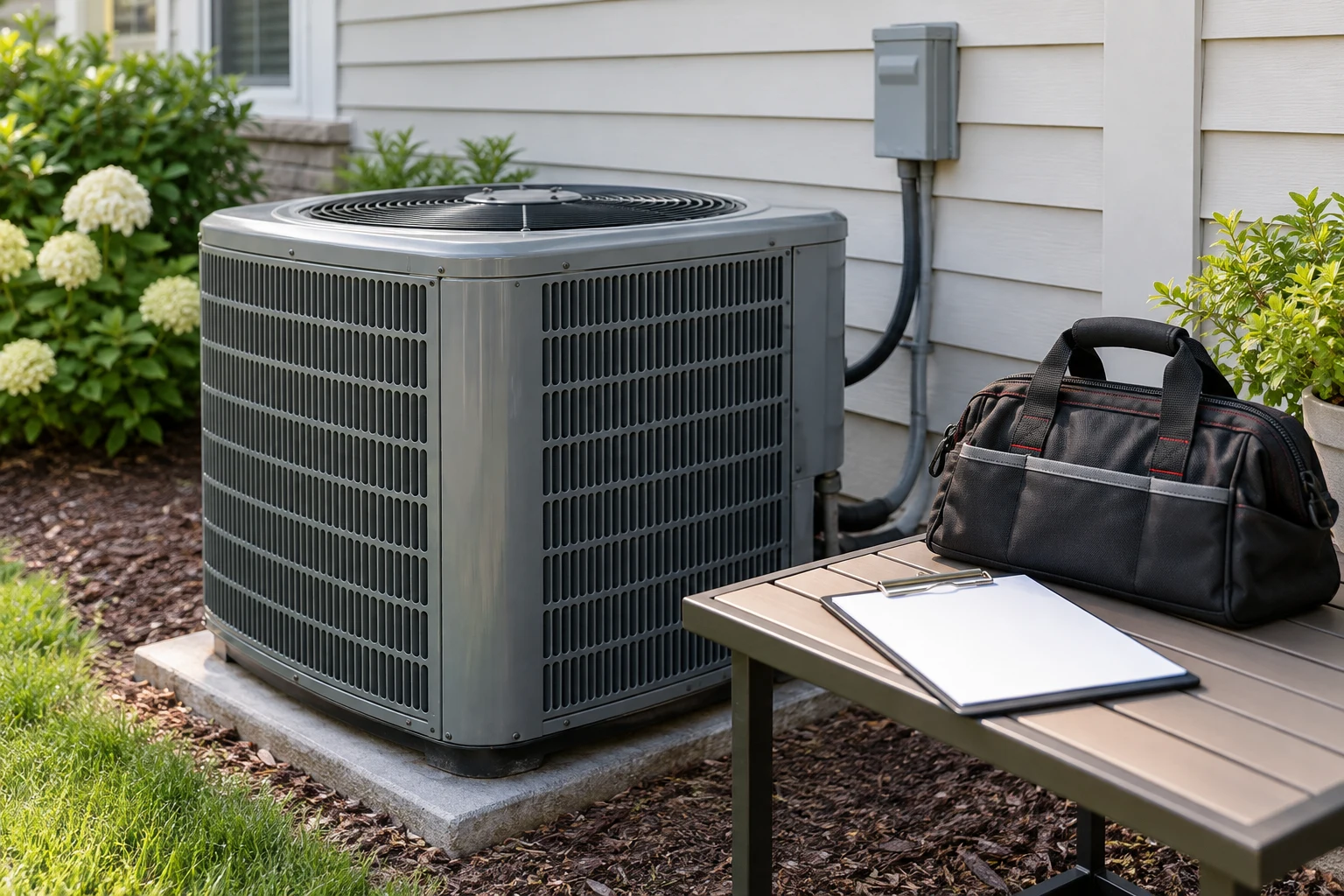
Featured image: an AI-generated illustration created for Mavelynt. It does not show a documented service visit or endorse a contractor.