
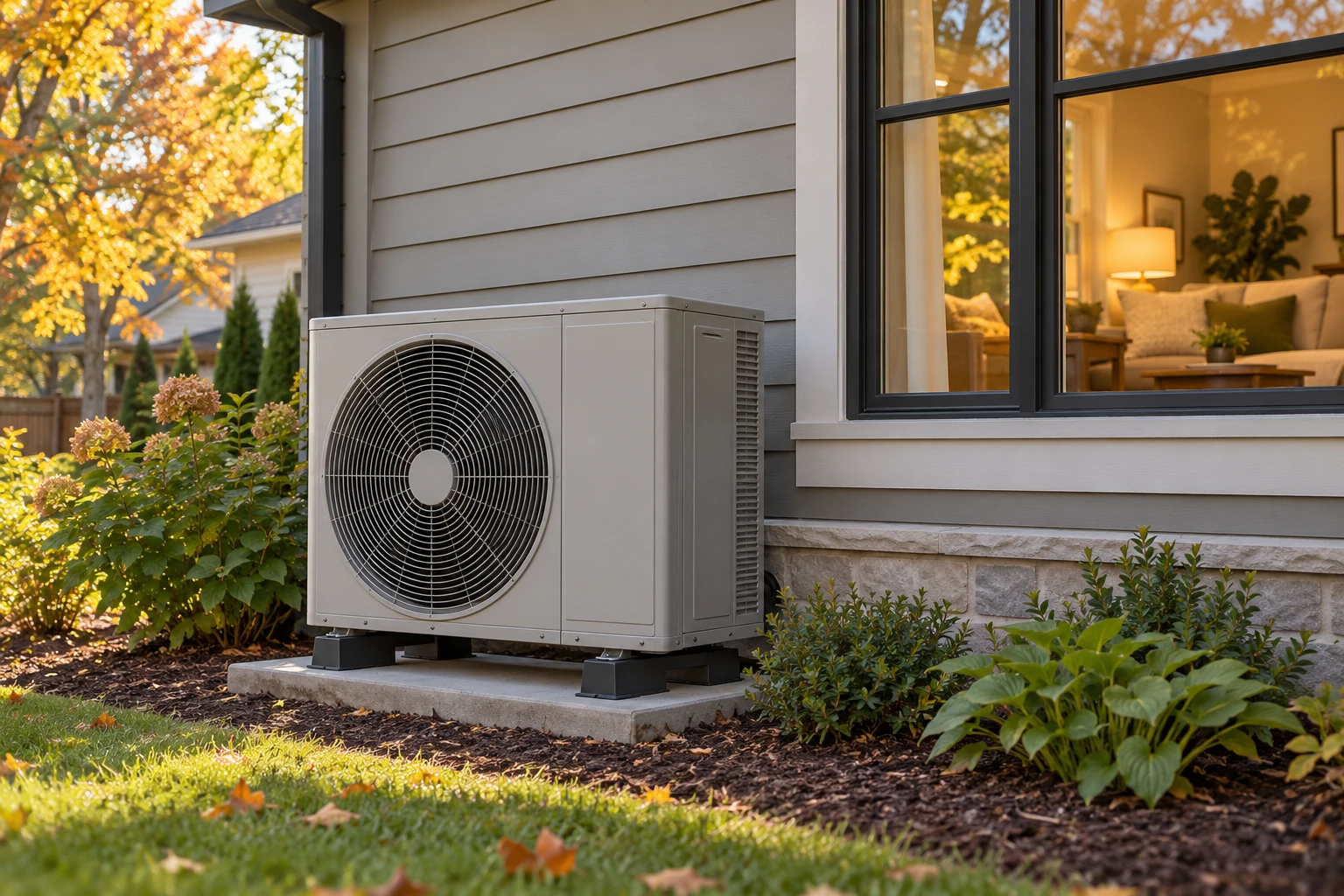
An air-source heat pump can cool a home and also provide heating. A conventional cooling-only central air conditioner needs a separate heating source. That is the starting point for a useful comparison—not a promise that one option will always be cheaper, more comfortable, or suitable for every house.
If you are replacing an AC, ask what each proposal would do for both summer cooling and winter heating. This guide focuses on residential air-source systems and the information a U.S. homeowner should request. It does not cover geothermal installation, heat-pump water heaters, DIY conversions, or equipment repair.
Both Move Heat Out During Cooling
ENERGY STAR's explanation of heat-pump operation, published February 2, 2024, describes how both systems use refrigerant to move unwanted indoor heat outside during cooling. An air-source heat pump can reverse the process to transfer outdoor heat indoors during heating, including when the outdoor air is cold.
Carrier's reversing-valve explanation identifies the component that changes refrigerant flow between these modes. That explanation is background, not an inspection instruction. Do not open a unit or attempt to operate a valve to identify your system.
An outdoor cabinet's appearance is not enough for a reliable comparison. Use the model information already in your paperwork or ask the service company to identify the equipment. You do not need to approach moving equipment, remove a panel, or run an operating test to prepare your questions.
Decide what happens to the heating system first
A cooling quote and a heating-and-cooling quote are not the same purchase. Before comparing equipment, write one sentence: The existing heating system will remain, become backup, or be retired. If that sentence is unresolved, keep the proposals in separate groups.
Scenario: cooling needs replacement, but the furnace may stay
Educational scenario, not a recommendation for a particular home: a household has ducted cooling and an existing furnace that has not been assessed for replacement. Its immediate problem is cooling equipment, not a decision to abandon the furnace.
A cooling-only AC proposal can retain separate heating. A heat-pump proposal might also retain it, with the furnace serving a defined heating or backup role. Those are two configurations to price and document, not evidence that a furnace must be discarded. ENERGY STAR describes heat-pump arrangements that can include a furnace in a dual-fuel system.
Ask the contractor to identify the retained furnace, indoor coil and blower compatibility, controls, proposed heating roles, and any duct or electrical work. Do not label a heat pump as a complete heating replacement if the proposal still relies on the furnace under some conditions. Existing equipment being retained also needs a condition assessment; retaining it is not a promise of remaining life.
Decision output: two proposals that name the same retained equipment, with any additional heating capability and control work identified separately. Compare installation scope before making an operating-cost comparison.
Scenario: the household wants to change the heating role too
In this educational scenario, both cooling replacement and the future of the heating system are open decisions. The homeowner wants to know whether a heat pump would provide the main heat and what, if anything, would supplement it.
Request the proposed model's heating capacity at the home's relevant outdoor design conditions, the home's assessed heating requirement, the intended backup arrangement, and the electrical scope. Ask who will document any service-capacity assessment and quote any required infrastructure work. A cooling efficiency rating alone does not resolve those questions.
Distribution matters as well: a ducted replacement and ductless equipment serving selected rooms do not necessarily cover the same spaces. Match the rooms and heating responsibilities before comparing the price. ENERGY STAR's clean heating and cooling guidance describes multiple configurations; it does not make one configuration right for every climate and house.
Decision output: a room/system coverage note, a documented heating and backup plan, and an installation scope that distinguishes equipment from infrastructure. If those items are missing, the decision is not ready merely because one quote lists a higher efficiency number.
Winter Performance Needs a Home-Specific Discussion
“It works in cold weather” does not answer how a particular system will meet your home's heating needs. ENERGY STAR distinguishes cold-climate equipment and recommends discussing local conditions, sizing, and possible backup integration with the contractor.
Ask the contractor to explain the proposed model's heating performance at the outdoor conditions used for your home's design. Request the supporting performance information, the home's heating requirement, and a description of any additional heat expected to be needed. Do not substitute a product-family slogan for those details.
Useful questions are:
- Which winter conditions were used to evaluate this proposal?
- What heating performance is documented for the actual model at those conditions?
- What additional heat source, if any, is included, and what is its intended role?
- What work is included to make the proposed arrangement function as described?
- Who will explain the controls and provide the operating documents after installation?
Cooling needs still matter. Our central AC sizing guide covers the cooling-capacity questions in more detail. A heat-pump proposal should account for heating as well as cooling; this article does not supply a capacity rule or tell you which load should control the design.
Do Not Assume the Heating Bill Will Fall
Heating efficiency and a household's final energy bill are different comparisons. Carrier's heat-pump versus AC guide discusses the importance of climate and heating needs. For your decision, request a documented comparison using your existing arrangement and the proposed one.
Keep electricity and any retained heating fuel in the discussion. Ask which rates, usage assumptions, equipment, and additional heating operation were included in an estimate. If an offer includes an incentive, request its current eligibility conditions separately rather than subtracting unconfirmed money from your budget.
The point is not to predict a precise bill yourself. It is to find out whether the seller's comparison describes your household and the equipment you would actually receive. Ask for uncertainty to be shown rather than hidden behind one savings number. This guide supplies no installation-price range, universal savings percentage, or guaranteed payback period.
Prepare for the Conversation Without Testing Equipment
Bring information you already have: model documents, service history, a description of your heating source, and notes about which rooms are uncomfortable in each season. If relevant, bring utility usage records with account and payment details removed from copies you share.
Describe the problem without naming an unconfirmed cause. For example, record that an upstairs room stays warm during cooling rather than declaring that the current system is too small. Make a separate list of what you want a proposal to address and what the contractor says would remain outside its scope.
Our AC contractor and service-visit guide explains how to organize questions and check a provider's credentials. For the later maintenance discussion, our AC tune-up and maintenance-plan guide helps separate routine service from repairs. Ask for the actual heat-pump manufacturer's maintenance requirements rather than assuming an AC service package covers every heating function.
Do not change wiring, remove service panels, inspect capacitors, handle refrigerant, or alter gas equipment to prepare for a quote. Do not experiment with emergency-heat or installer settings. Ask the provider to explain the controls for the installed system and follow its user instructions. This is a planning guide, not a troubleshooting procedure.
Keep a configuration record with each proposal
Use one short record per option. Copy the contractor's answers rather than filling gaps with assumptions.
- Heating retained: identify the equipment that stays, its assessed condition, and whether it remains primary heat or backup.
- Cooling coverage: list the rooms or zones included and the distribution approach.
- Cold-weather evidence: attach model-specific performance and the heating-load basis used for the proposal.
- Infrastructure and controls: separate confirmed inclusions, allowances, and work still awaiting assessment.
- Household priorities: record whether the priority is cooling replacement, changing heating fuel, comfort in particular rooms, or another stated goal.
- Open decision: name the missing fact and who will supply it before approval.
Return to this record when a contractor substitutes a model or changes what stays. A changed heating role is a changed proposal, even when the headline price looks similar. For choosing the visit/provider rather than the system configuration, use our air conditioner repair contractor guide.
Sources and Review Scope
Sources checked October 15, 2026. ENERGY STAR supplies public educational guidance; Carrier is an equipment manufacturer with a commercial interest. We use these sources to explain system differences, not to endorse a brand. This article does not claim firsthand installation experience, professional design review, or eligibility for current incentives.
- ENERGY STAR: How Does a Heat Pump Work?, February 2, 2024.
- ENERGY STAR: Air-Source Heat Pumps, system types and cold-climate considerations.
- Carrier: What Is a Reversing Valve?, conceptual operation only.
- Carrier: Heat Pump vs. Air Conditioner.
Featured image: an AI-generated illustration created for Mavelynt. It is not a documented installation or a model-specific clearance diagram.