
Choosing between gas and electric water heaters is a decision about the available fuel, the proposed equipment, and the work your home needs. Comparing a gas price with an electricity price does not settle it. Neither does the word “electric”: resistance and heat-pump water heating are different approaches that both use electricity.
Start with two written proposals that address the same household needs. Then separate what the installer has confirmed from what still depends on a site assessment. This guide organizes that fuel-and-infrastructure comparison; it does not recommend a conversion, select an appliance size, or predict a guaranteed bill.
Name the actual alternatives
The Department of Energy's consumer-water-heater definitions distinguish storage, instantaneous, and heat-pump equipment as well as different energy sources. Keep those dimensions separate. “Gas versus electric” should not quietly become “one gas storage tank versus every electrically powered product.”
Write down the manufacturer, model, fuel, and technology for each serious offer. If you only have a broad category, mark the model as unconfirmed. Our water heater types guide supplies the broader vocabulary without selecting the installation for you.
A natural-gas proposal and a propane proposal also need to identify the intended fuel explicitly. Do not assume that a gas appliance or an existing supply can be adapted by changing a small fitting. Any compatibility or conversion question belongs with qualified professionals and the exact manufacturer documentation.
Separate a replacement project from a fuel-conversion project
Name the actual alternatives first: gas storage, electric resistance, or a specified heat-pump water heater. Electric is an energy source, not one uniform appliance technology. The two fictional routes below illustrate project boundaries, not product recommendations or current installed costs.
Route one: replacement within the existing fuel
A household proposes replacing a gas storage heater with another specified gas model in the existing location. The provider still needs to assess the gas supply, venting/combustion arrangements, connections, location/access, applicable permits and model requirements. Same fuel does not prove that every old part can be reused or that no electrical or other trade work is required.
The project record should identify: equipment retained and assessed; work replaced; exclusions; who obtains local approval where required; and what finding would change the scope. Treat a provider's unassessed reuse assumption as pending, not as a confirmed saving. The relevant comparison is the assessed installed replacement, not an appliance price alone.
Route two: conversion from gas to a specified electric option
A second household compares keeping gas storage with installing a named heat-pump water heater. Electrical suitability and required supply work need qualified assessment. The proposed location must also address that exact model's air, condensate, access and delivery requirements. Removing or retiring gas-related equipment and any associated venting is separately assigned to qualified providers where applicable; it is not an owner task.
ENERGY STAR describes the heat-transfer principle, not permission to treat every existing closet as suitable. Have the responsible professionals identify the installation scope and applicable local approvals before treating this as a complete alternative. For electrically powered heating methods, use the separate heat-pump versus resistance comparison.
The project record should identify: assessed electrical/location requirements; included and excluded conversion work; any gas/venting retirement scope; permit responsibilities; temporary service implications; and remaining site assumptions. No universal circuit rating, room volume or permit route is supplied here.
Which comparison is ready to make?
Compare operating-cost assumptions only after both routes describe a viable project. Keep fuel units, energy quantities, rates, usage assumptions and mode assumptions explicit. If other appliances retain gas service, do not count an eliminated gas account or its fixed charges as automatic savings. Confirm the actual utility consequence instead.
Also record what future household or location changes each scope does and does not anticipate. Future flexibility is a stated project requirement, not a promise that one fuel is future-proof. When the location, technology or supply work changes, reopen the route record rather than keeping an obsolete like-for-like price beside a conversion estimate.
The technology shortlist identifies possible categories; this page separates two specific project routes. The replacement quote comparison handles totals once those routes have a defined scope. No fuel is declared universally cheaper or better.
Keep combustion and electrical work out of homeowner checks
For a gas proposal, ask how the provider will address the actual appliance's combustion-air, exhaust, and supply requirements. For an electric proposal, ask how electrical suitability will be confirmed. These are requests for professional evidence, not a checklist for opening panels or testing a vent.
If you suspect a gas leak, leave the area and contact the appropriate utility or emergency services from safety. SoCalGas's evacuation-first guidance supports that priority; its contact number is regional. Do not remain near equipment collecting comparison notes or attempt to control a suspected leak.
Ask which functions of the exact proposed model depend on electricity and what its owner instructions say about interruptions. Do not assume that every gas water heater provides the same outage behavior. No alternative power connection, pilot-light procedure, or restart sequence is supplied here.
Compare running-cost assumptions on equal terms
Ask for the energy-use estimate and the applicable price separately. Gas and electricity may be billed in different units, so comparing the printed price of one unit directly with another is not a useful shortcut. Have the provider explain the calculation and which current local tariff it uses.
The FTC explains that EnergyGuide operating costs are estimates, based on typical use and a national average energy price. Actual cost depends on use and local prices. Keep that disclosure beside any household-specific estimate instead of presenting the label as a bill prediction.
Ask whether fixed charges would actually change if the water-heating fuel changed. A home that retains other equipment on the same utility service needs a different discussion from one considering ending that service. Have the utility or provider confirm the relevant charges; do not count an assumed account closure as savings.
For electrically powered alternatives, distinguish the technologies before accepting a comparison. ENERGY STAR explains that heat-pump water heaters move heat into stored water. Our focused heat pump versus electric-resistance comparison addresses that separate choice. This page does not repeat its full technology assessment.
Put the installed project beside the operating estimate
Ask for the same scope categories from both providers: appliance, removal, site work, any additional trades, applicable approvals, and handover. A lower operating estimate does not explain an excluded building task. Conversely, a larger installation scope needs an explanation rather than an automatic rejection.
Use our water heater replacement quote framework for the detailed inclusions. Keep this fuel comparison focused on why the projects differ. Ask how extra work would be approved if an assessment reveals a condition not included in the initial offer.
Before deciding, summarize each option in plain language: the exact appliance, confirmed site suitability, work included, energy assumptions, unresolved questions, and who answers them. You do not need a universal fuel winner. You need alternatives that can be compared against the same home and use pattern.
Sources and scope
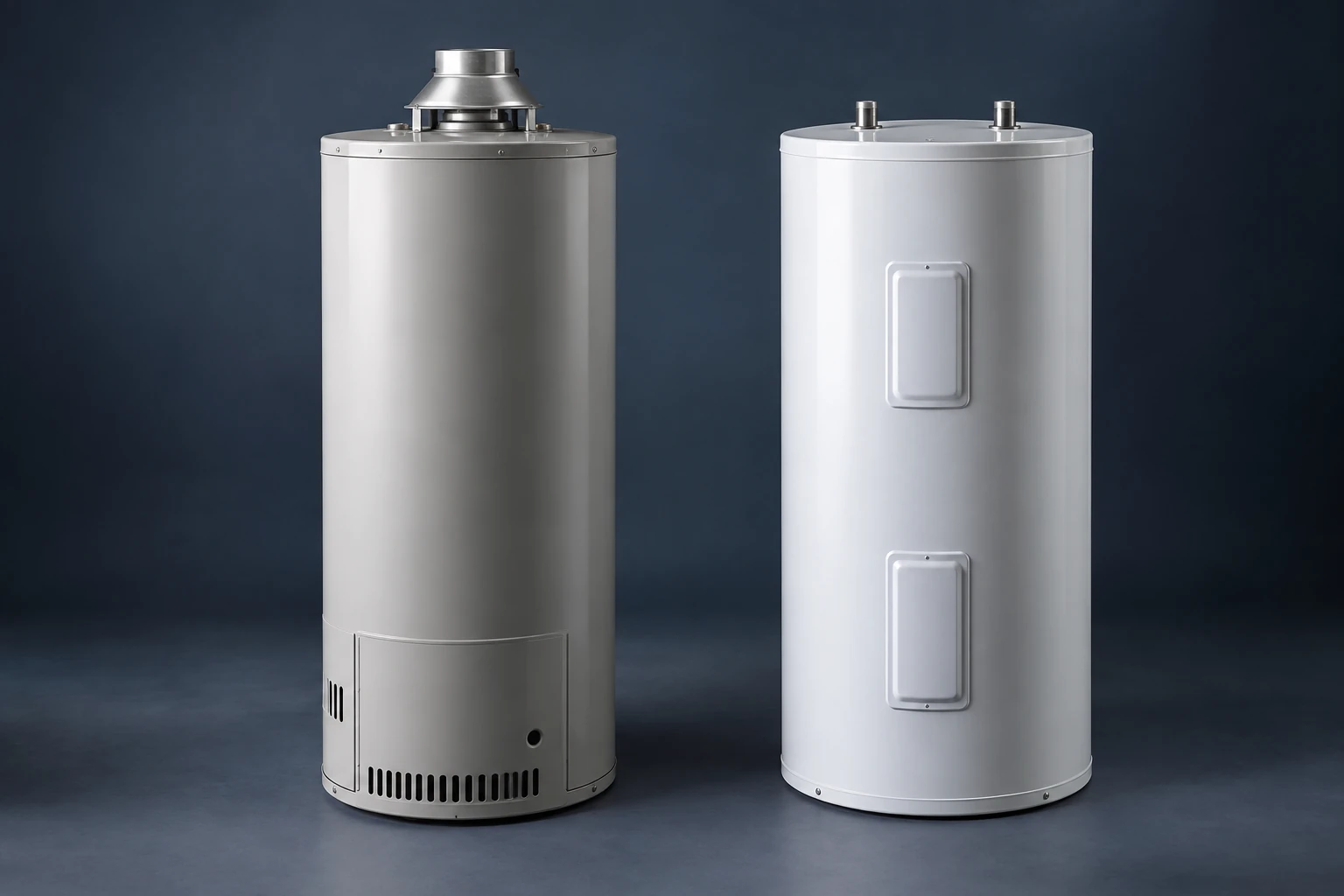
Sources checked October 20, 2026. DOE supplies equipment definitions, ENERGY STAR the heat-transfer distinction, FTC the limits of operating-cost estimates, and SoCalGas the emergency priority. No current price, incentive, tax credit, universal electrical specification, permit rule, or payback is asserted. The featured image is an original AI-generated product illustration, not a model recommendation or installation diagram.